

 Image 1 of 1
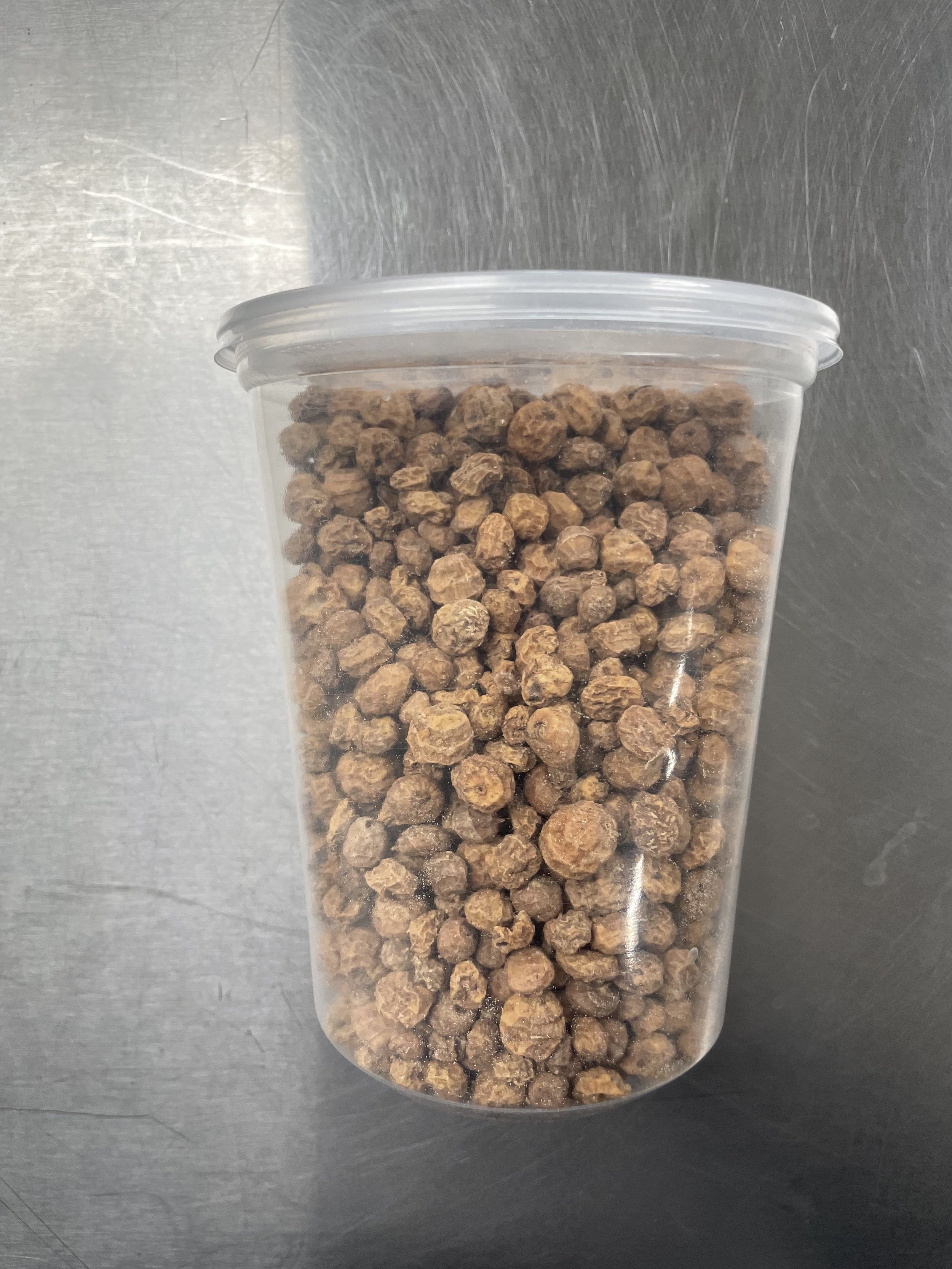
Tiger nuts, small tubers native to Africa and the Mediterranean, are chewy, sweet, and nutrient-dense with a flavor often compared to toasted coconut or sweet almond. Despite their name, they are not nuts but edible rhizomes of the sedge plant Cyperus esculentus, making them naturally gluten-free and suitable for many with nut allergies. Rich in fiber, resistant starch, healthy fats, and vitamins E and C, tiger nuts support digestion and can help regulate blood sugar when consumed as part of a balanced diet. They are eaten raw, roasted, or dried, and used to make horchata de chufa, flour, oil, and dairy-free milk alternatives, offering a versatile, plant-based ingredient for snacks, baking, and beverages.
Tiger nuts, small tubers native to Africa and the Mediterranean, are chewy, sweet, and nutrient-dense with a flavor often compared to toasted coconut or sweet almond. Despite their name, they are not nuts but edible rhizomes of the sedge plant Cyperus esculentus, making them naturally gluten-free and suitable for many with nut allergies. Rich in fiber, resistant starch, healthy fats, and vitamins E and C, tiger nuts support digestion and can help regulate blood sugar when consumed as part of a balanced diet. They are eaten raw, roasted, or dried, and used to make horchata de chufa, flour, oil, and dairy-free milk alternatives, offering a versatile, plant-based ingredient for snacks, baking, and beverages.